
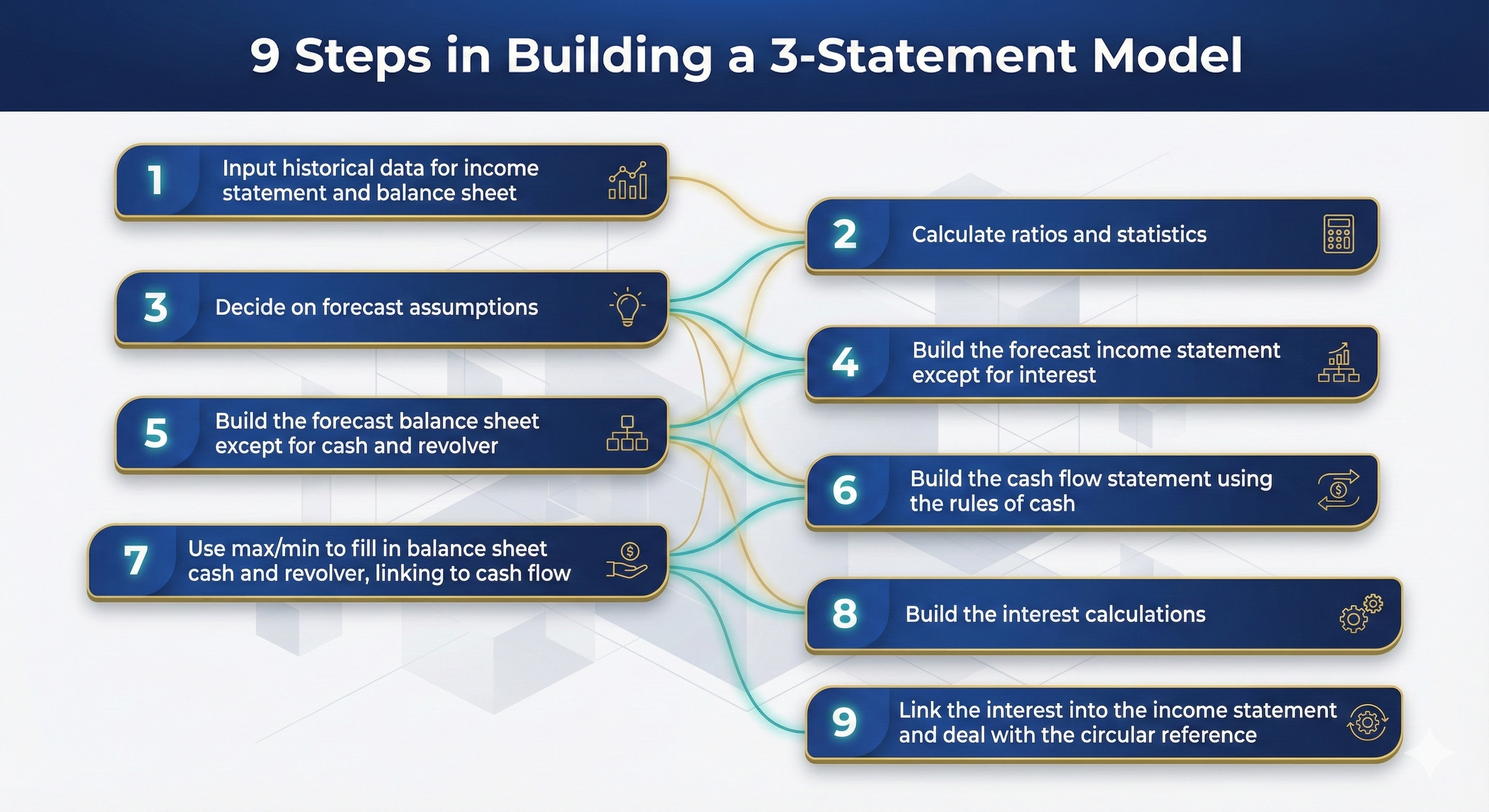
The Definitive Guide to Three-Statement Model Templates: Build Better Financial Forecasts
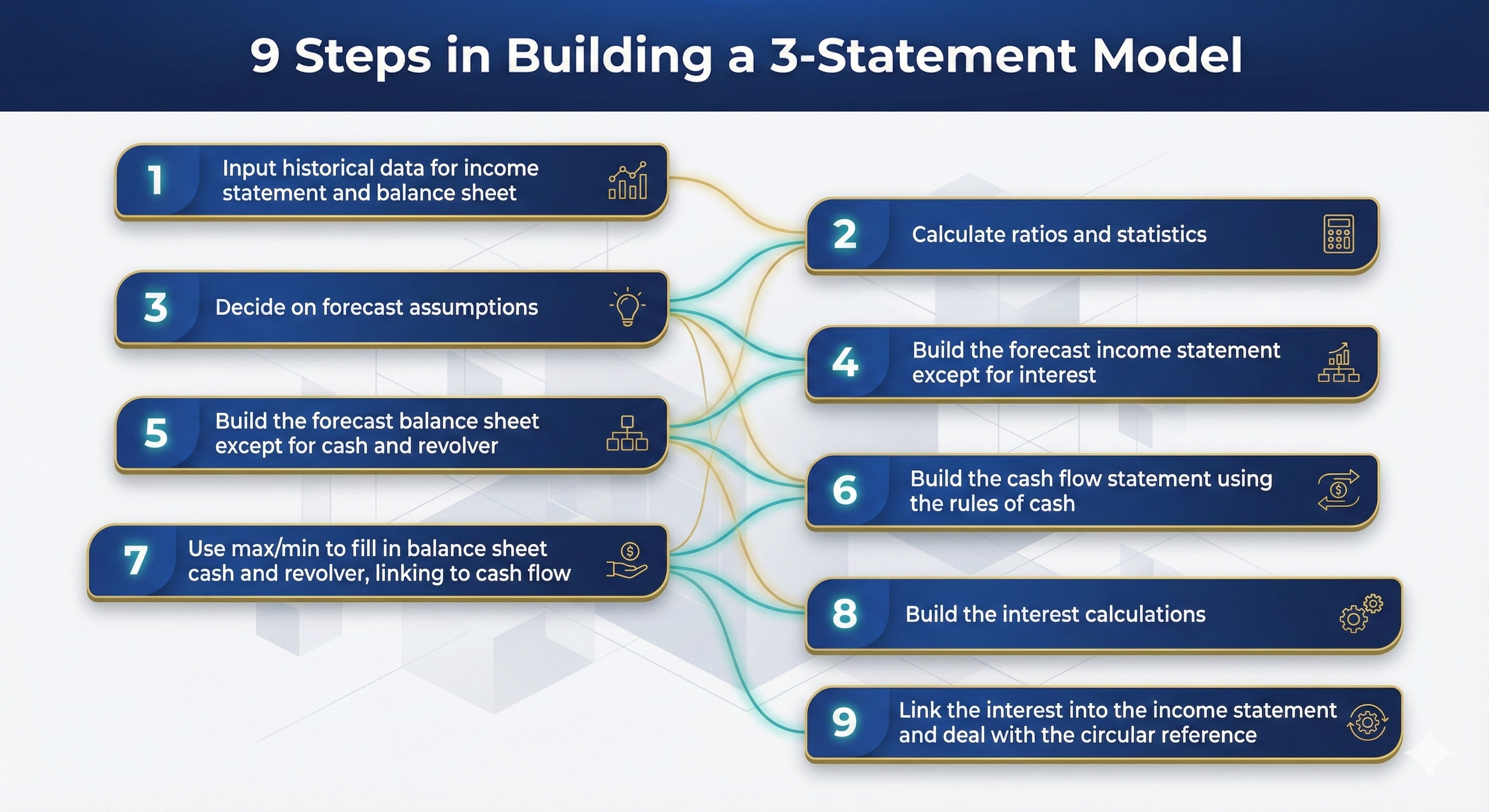
A three-statement model template is the cornerstone of effective financial forecasting. This Excel-based tool integrates the income statement, balance sheet, and cash flow statement to create dynamic projections of a company’s financial future. Financial analysts, investment bankers, and business leaders rely on these models to understand how their decisions impact revenue, profitability, cash position, and overall financial health.
In this comprehensive guide, we’ll explore everything you need to know about three-statement model templates, from their basic components to advanced techniques like driver-based forecasting and cohort analysis. You’ll learn how to build and link these statements, avoid common modeling errors, and implement best practices for cash flow forecasting.
Key Components of a Three-Statement Model Template
Income Statement Components
The income statement begins with revenue and subtracts various costs and expenses to arrive at net income. In a well-built template, revenue forecasting relies on drivers like sales volume and pricing rather than simple growth percentages.
- Revenue (broken down by product line or division)
- Cost of goods sold (COGS)
- Gross profit
- Operating expenses (SG&A, R&D)
- EBITDA
- Depreciation and amortization
- Interest expense
- Taxes
- Net income
Balance Sheet Components
The balance sheet follows the fundamental accounting equation: Assets = Liabilities + Equity. A good template includes working capital schedules and debt projections that feed into this statement.
- Current assets (cash, accounts receivable, inventory)
- Non-current assets (PP&E, intangibles)
- Current liabilities (accounts payable, short-term debt)
- Non-current liabilities (long-term debt)
- Shareholders’ equity (common stock, retained earnings)
Cash Flow Statement Components
The cash flow statement reconciles net income to actual cash movements. It typically uses the indirect method, starting with net income and making adjustments for non-cash items.
- Cash from operating activities (net income, non-cash adjustments, working capital changes)
- Cash from investing activities (capital expenditures, acquisitions)
- Cash from financing activities (debt issuance/repayment, equity issuance, dividends)
FAQ
What is driver-based forecasting?
How do changes in assumptions impact the financial statements?
What are the best practices for maintaining a three-statement model?