
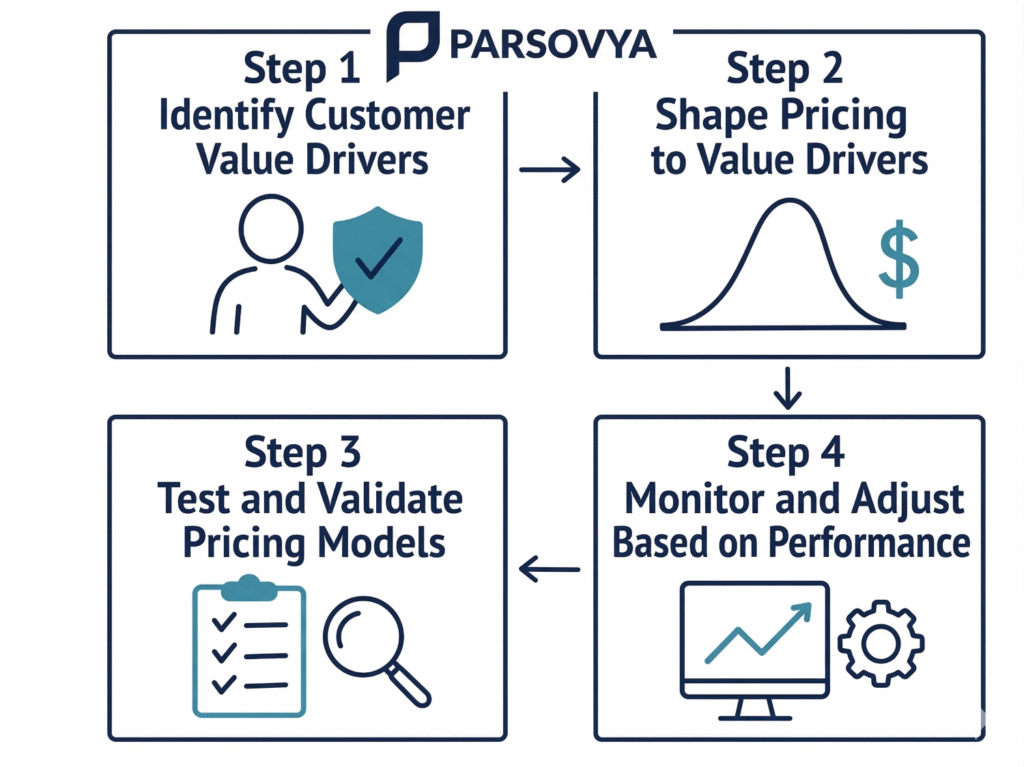
Pricing Strategy for B2B SaaS: The Complete Guide to Driving Revenue Growth
Introduction
Getting your pricing strategy for B2B SaaS right is one of the most important decisions your business will make.
Price too high and you lose customers before they even try your product. Price too low and you leave money on the table while struggling to cover costs.
A well-crafted SaaS pricing strategy does far more than set a number. It shapes how prospects perceive your value, how quickly you acquire new customers, and how long those customers stay with you.
For B2B SaaS companies, the stakes are even higher. You are selling to businesses that scrutinise every line item in their software budget. Your pricing must communicate value clearly and back it up with results.
In this guide, we cover every key component of a winning B2B SaaS pricing strategy, from choosing the right pricing model to reducing churn and building a revenue operations function that keeps everything aligned.
Understanding B2B SaaS Pricing Models
A pricing strategy is the structured approach a company takes to set and adjust the price of its product or service. In B2B SaaS, this means deciding how you charge customers, how much you charge, and how that price scales over time.
There is no single best pricing model. The right choice depends on your product, your customers, and your growth goals.
Subscription-Based Pricing
Customers pay a flat recurring fee: monthly or annually. This is simple to understand and creates predictable revenue. It works well for products with relatively uniform usage across customers.
Tiered Pricing
You offer multiple pricing plans, each with a different set of features or usage limits. Customers self-select the tier that fits their needs. This model is widely used because it serves both small businesses and enterprise clients from a single pricing structure.
Usage-Based Pricing
Also called consumption-based or pay-as-you-go pricing. Customers pay based on how much they use the product. This model lowers the barrier to entry and aligns cost directly with value delivered. It is growing in popularity, especially for infrastructure and API-driven products.
Value-Based Pricing
You price based on the outcome or value the customer receives, rather than your costs. This requires a deep understanding of your customer’s business and the measurable results your product creates. When done well, value-based pricing is the most profitable model available.
You can read more about it in our blog.
Freemium Pricing
A free tier allows users to access basic features without paying. The goal is to convert free users into paying customers over time. This model works best when you have a strong product-led growth motion and a low cost to serve free users.
Feature-Based Pricing
Price is tied to specific features rather than usage volume or user count. Customers pay more to unlock advanced capabilities. This model rewards product investment and encourages upselling.
Each of these models carries trade-offs. A tiered model might generate more revenue per customer than flat-rate subscription pricing, but it requires more sophisticated packaging and sales processes.
Sales Pipeline Hygiene: The Foundation of Smart Pricing Decisions
Even the best SaaS pricing strategy will fail if it is built on dirty data.
Sales pipeline hygiene refers to the practice of keeping your pipeline accurate, up to date, and free from stale or misleading information. It is the discipline of making sure every deal in your CRM reflects reality.
Why does this matter for pricing? Because your pipeline data directly informs your revenue forecasting. If your forecasts are wrong, your pricing decisions will be wrong too.
The Sales Pipeline Hygiene Checklist
- Regular review of leads
- Updating deal stages
- Understanding lead sources
Know where your customers are coming from. Leads from the ultimate commercial due diligence checklist can provide vital information about customer behavior.